Framing Cards
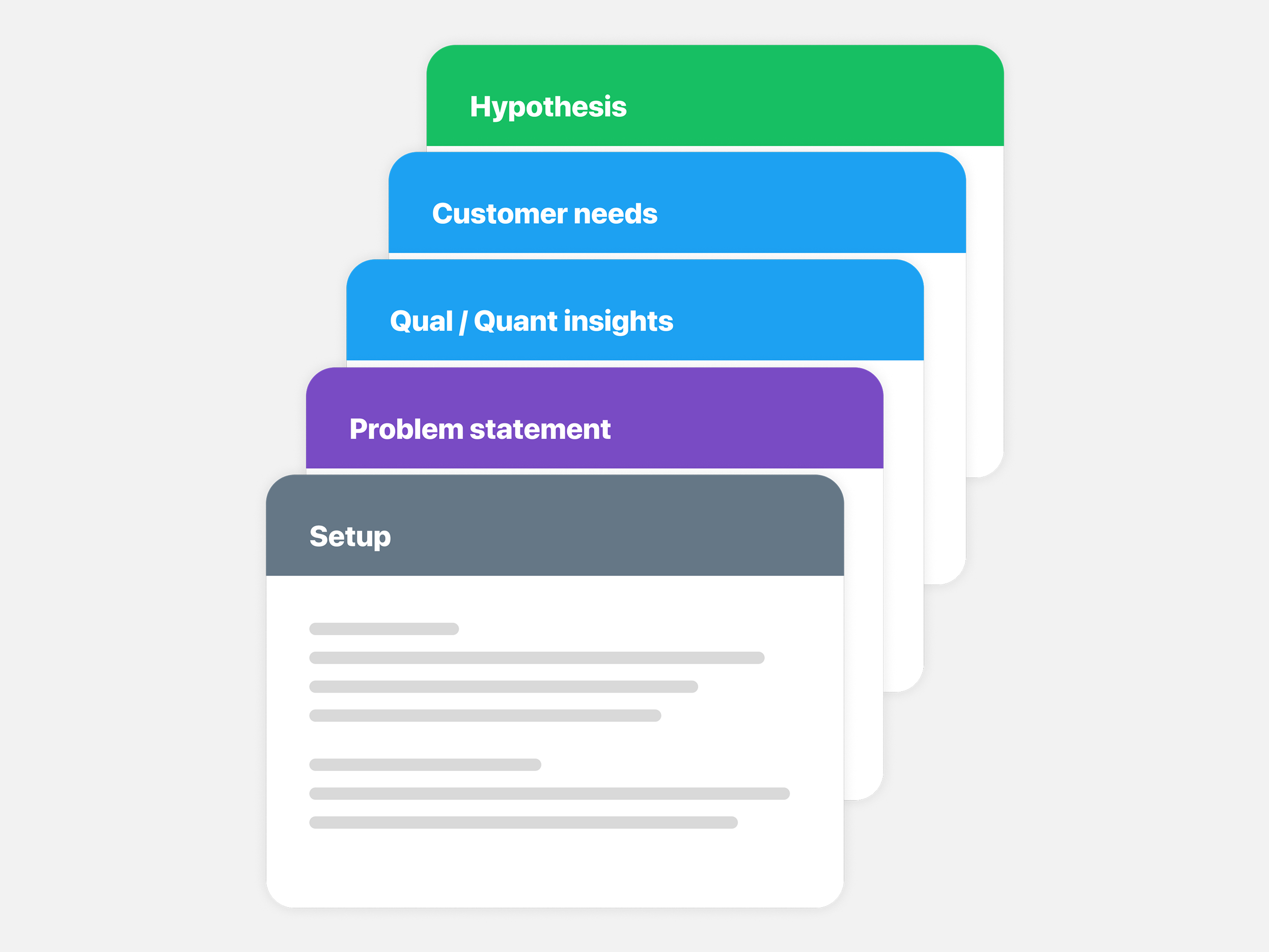
This project is an example of how I’ve created tools to help uplevel a designer’s skills.
Problem: Designers were inconsistent in how they set context for their work in different forums making it difficult to give feedback.
Goal: Provide best practices around framing design work to help designers effectively set up and communicate their work.
Impact: Teams across Twitter Design adopted the cards and used them in critiques and design reviews to present their work. They have helped to up level how the team communicates their work and made their Figma files easier to understand.
I’ve also used them at Thumbtack to help up-level the framing skills of my team.
Approach
I met with different designers and leaders to understand how they set context with their partners and stakeholders. I wrote up a doc around best practices and got feedback and buy-in from the rest of the design leadership team. I collaborated with a product designer on my team to establish the card system.
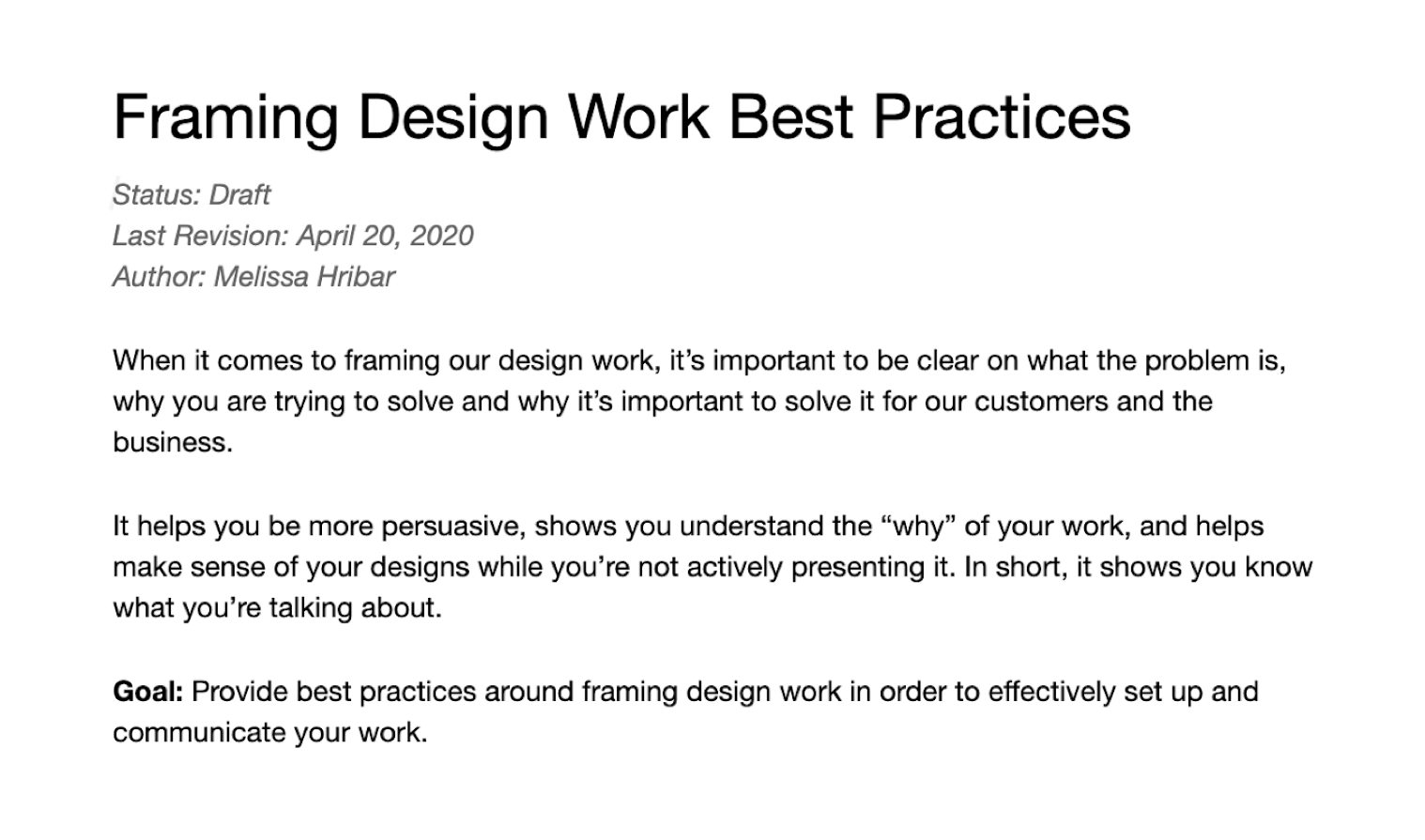
Doc I shared with my colleagues to get buy-in.
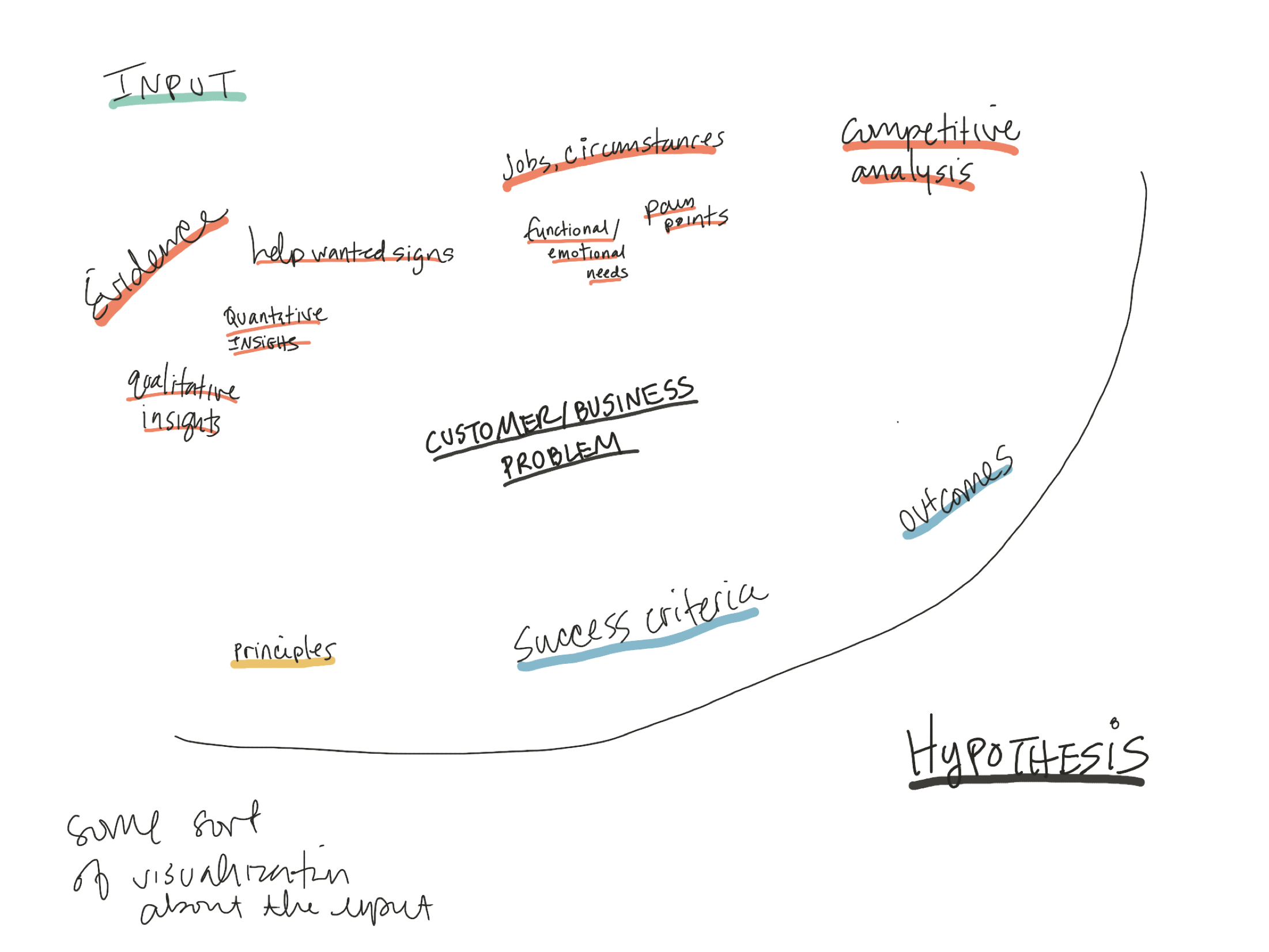
Sketch that I made to visualize the process.
Establishing a framework
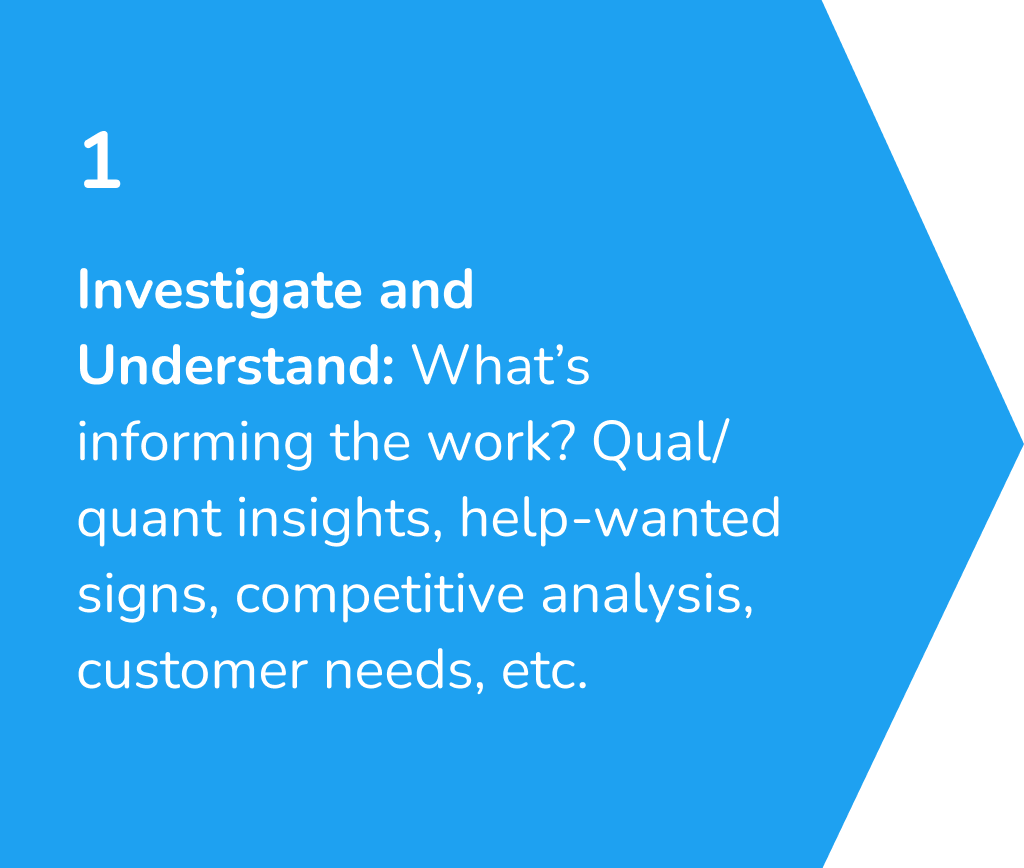
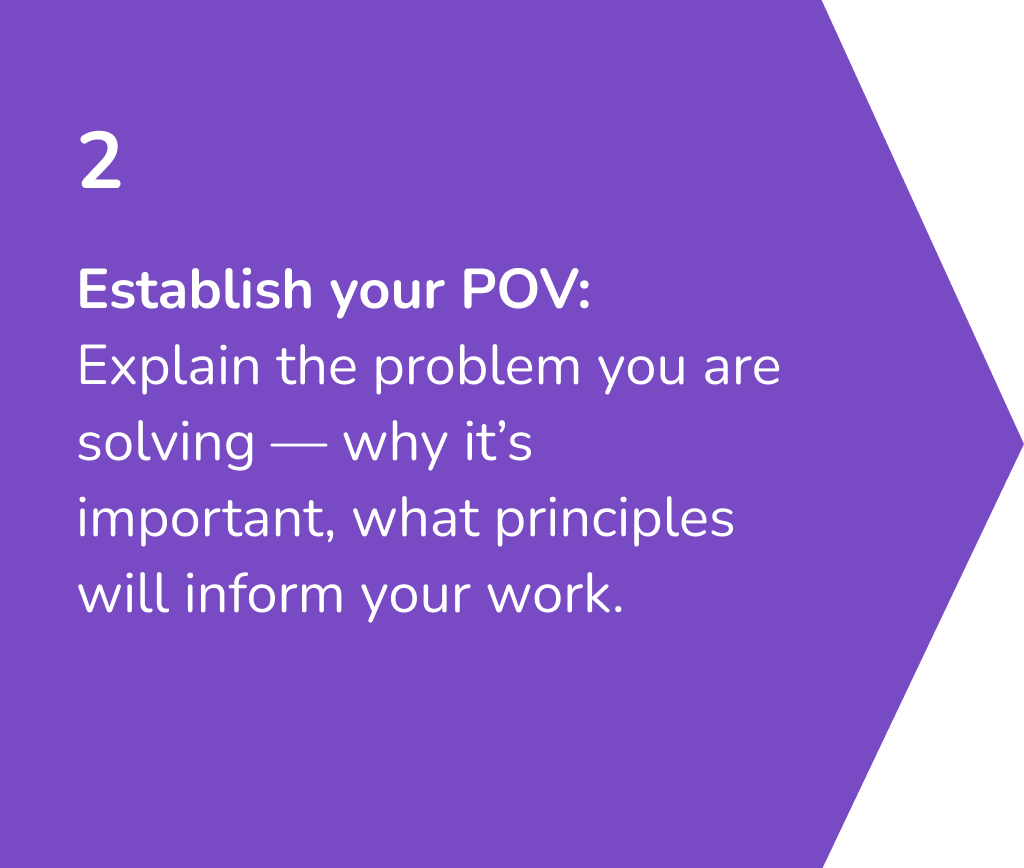
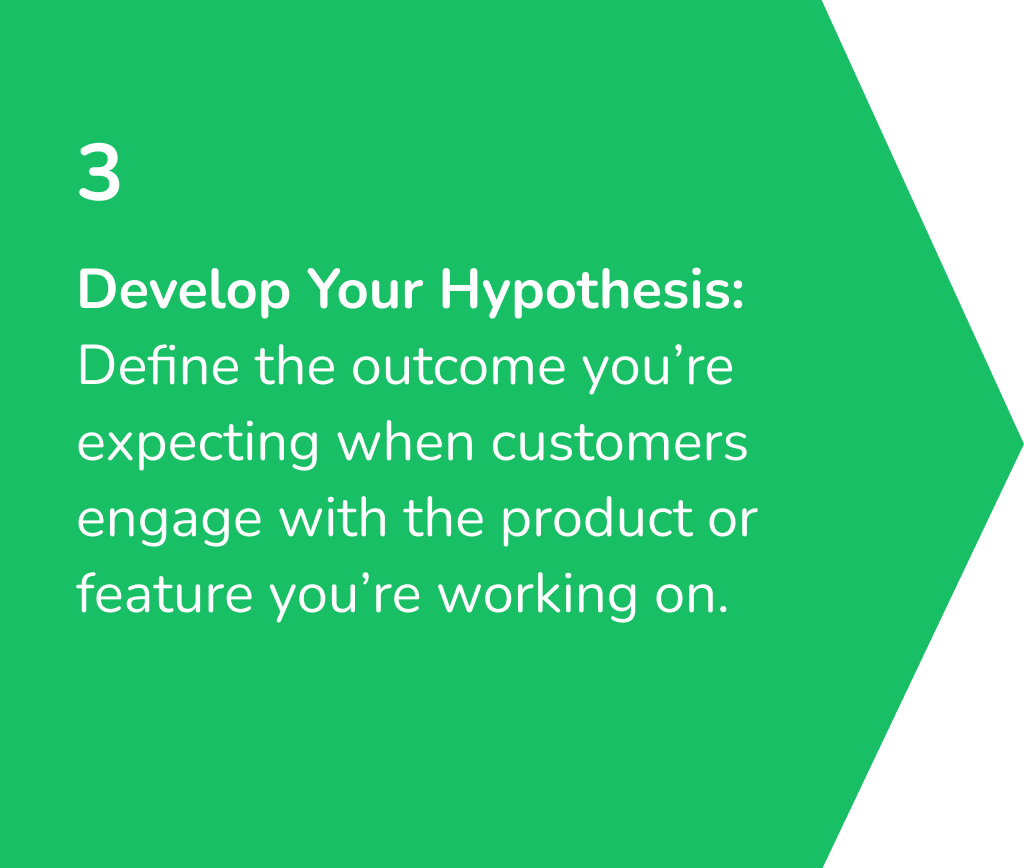
We came up with a framework to take the designers through the process.
Creating the cards
The framework was turned into a set of cards to help take designers through the process. The cards can also used in Figma files, so the relevant project context was living with the design work making it easier for others to grasp the context.
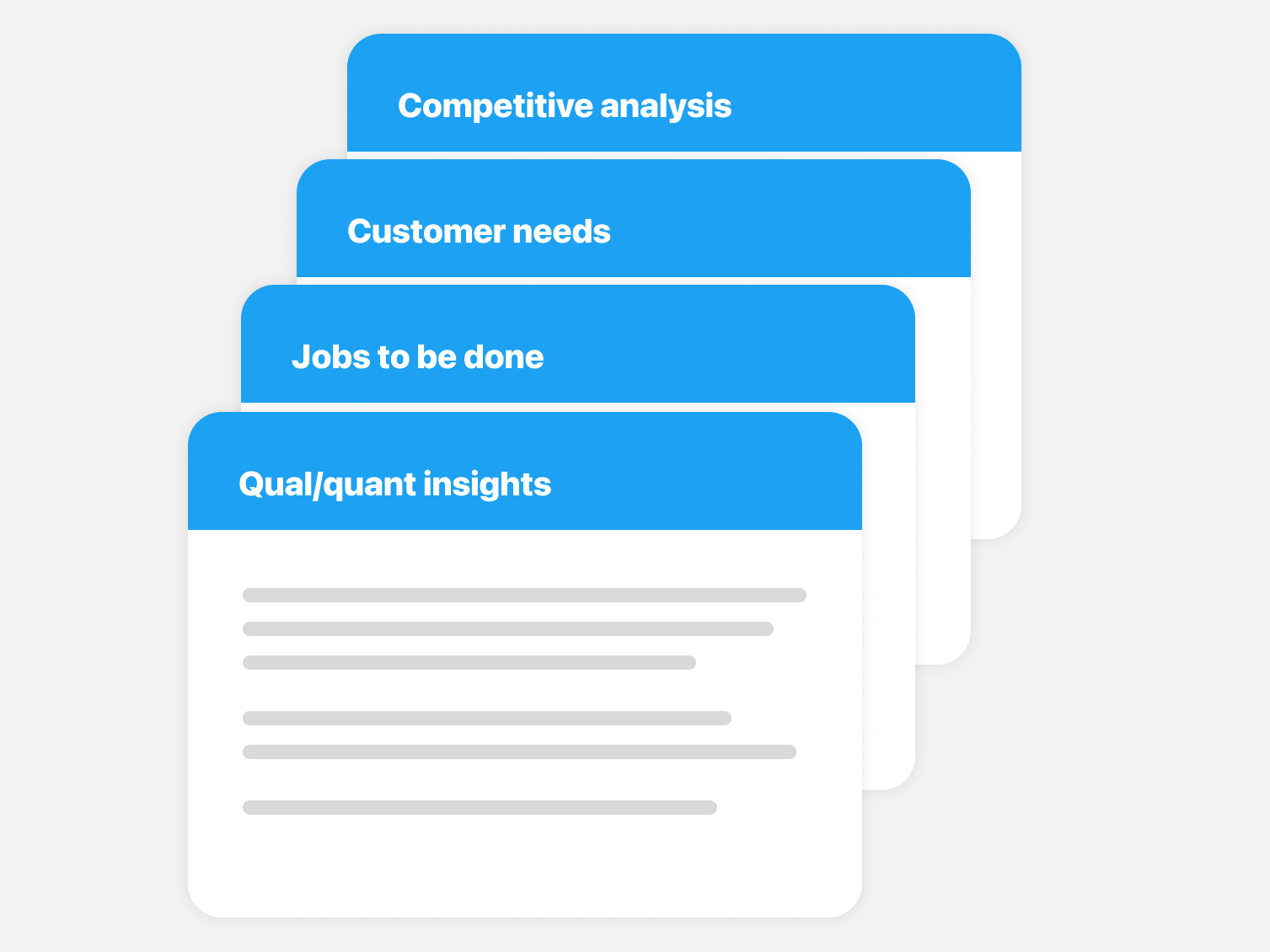
Understand and Investigate Cards
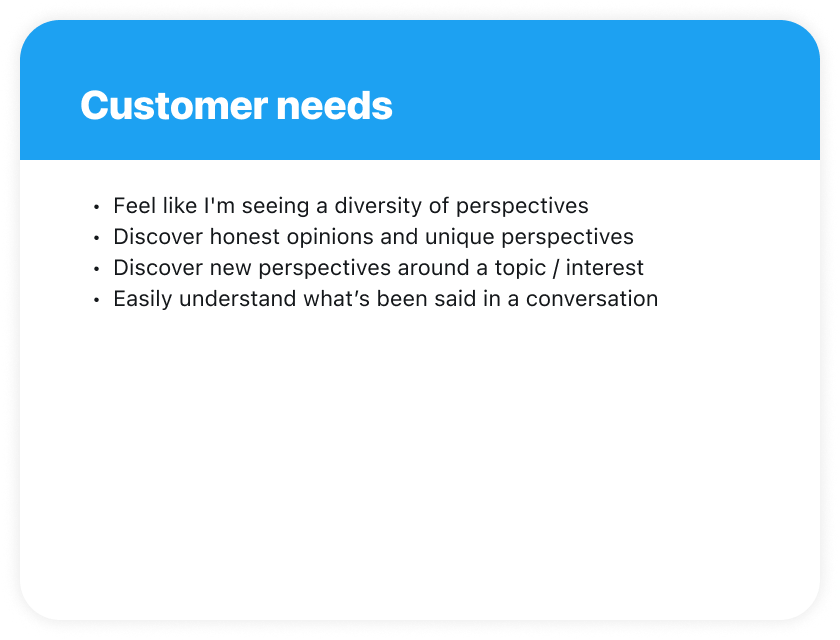
Use these cards to explain what you already know related to this work, any qualitative or quantitative insights, customer needs, etc.
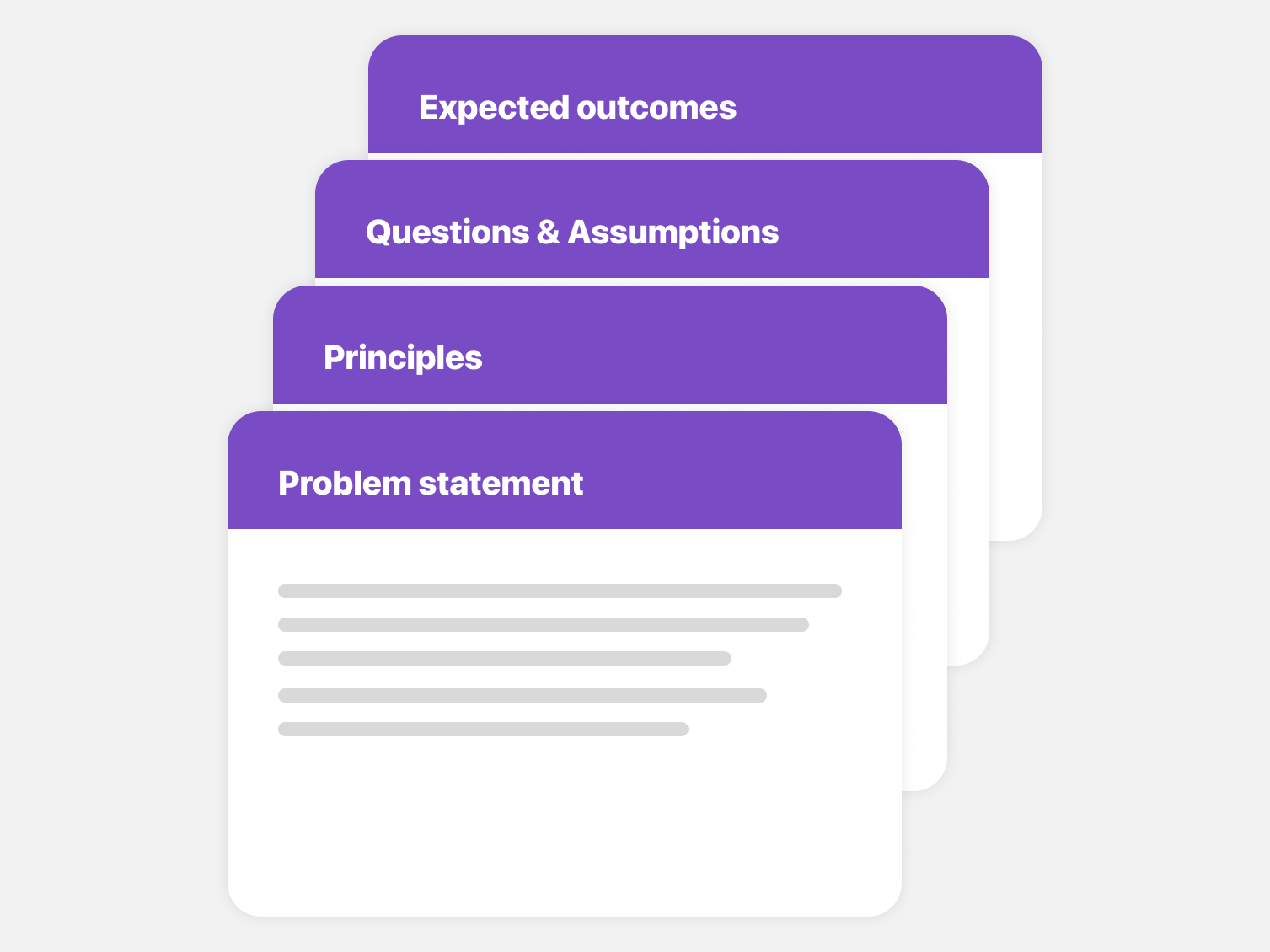
POV Cards
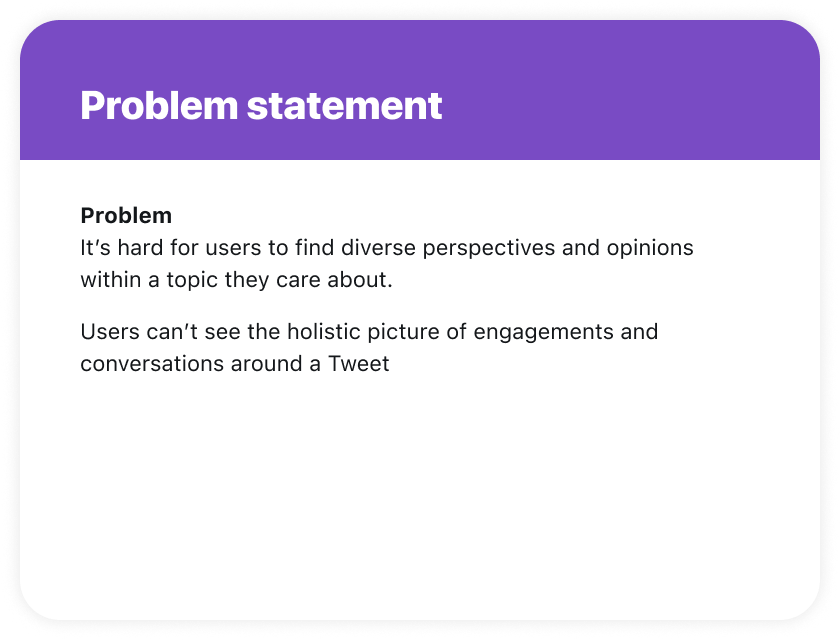
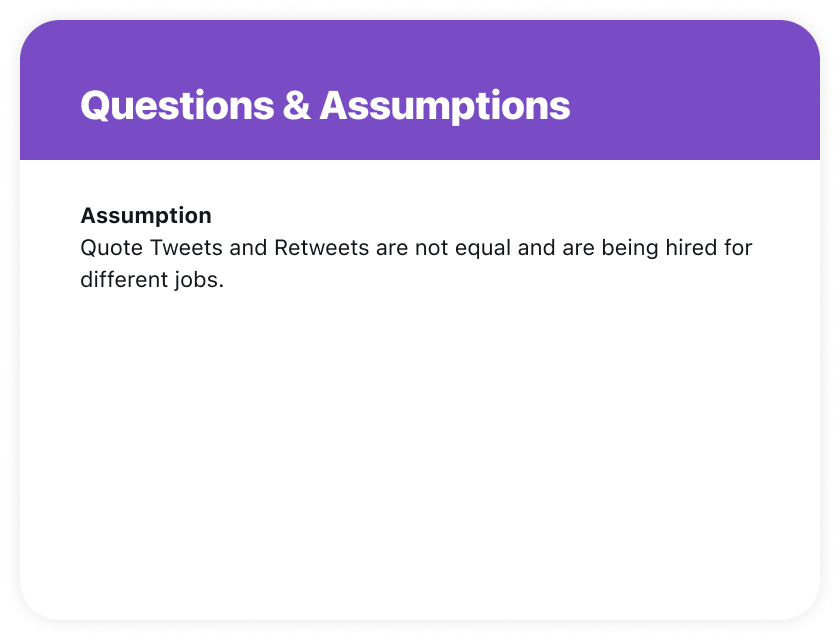
Use these cards to explain what problem you are solving, the principles that will inform your work, what assumptions you are making, and what outcomes you’re expecting.

Hypothesis Card
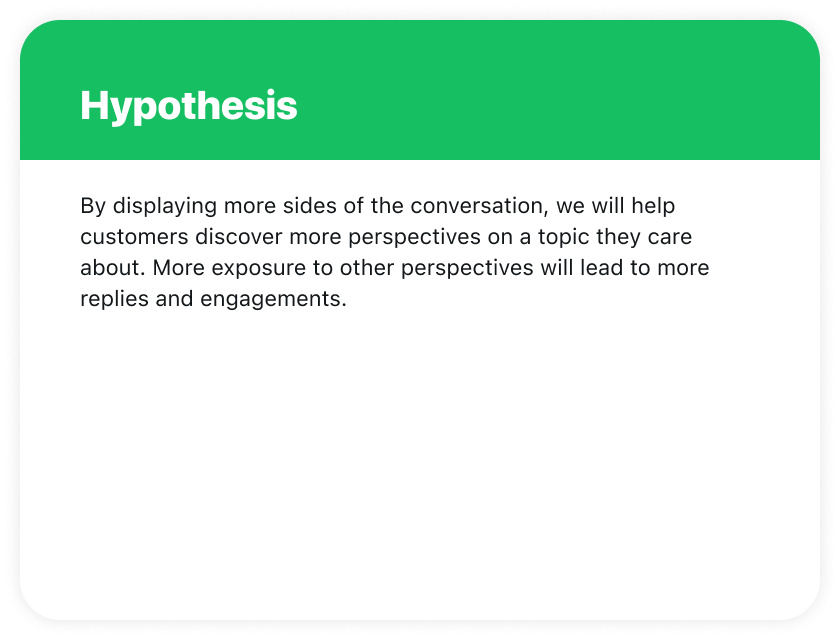
Use this card to clearly define what you’re expecting the outcome will be when customers engage with the feature you’re working on. And how it will be measured.
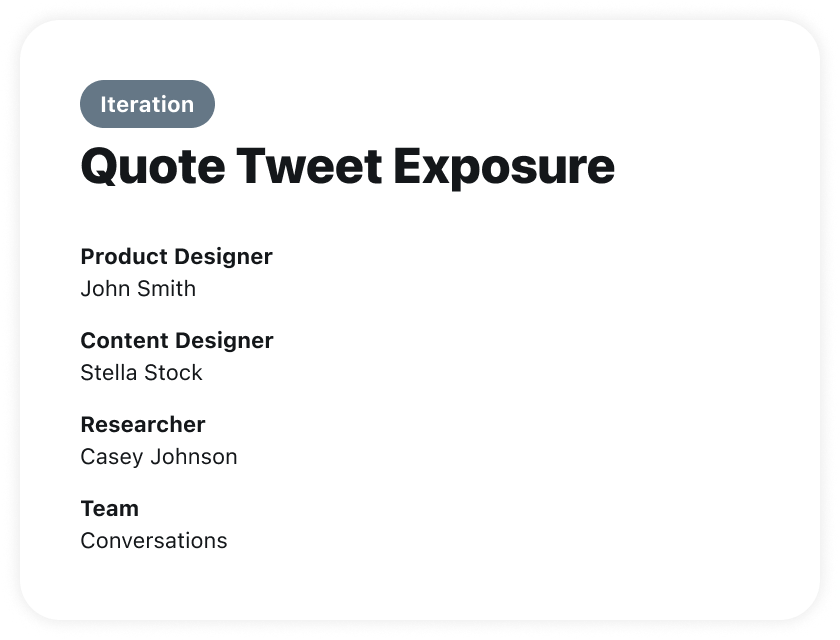
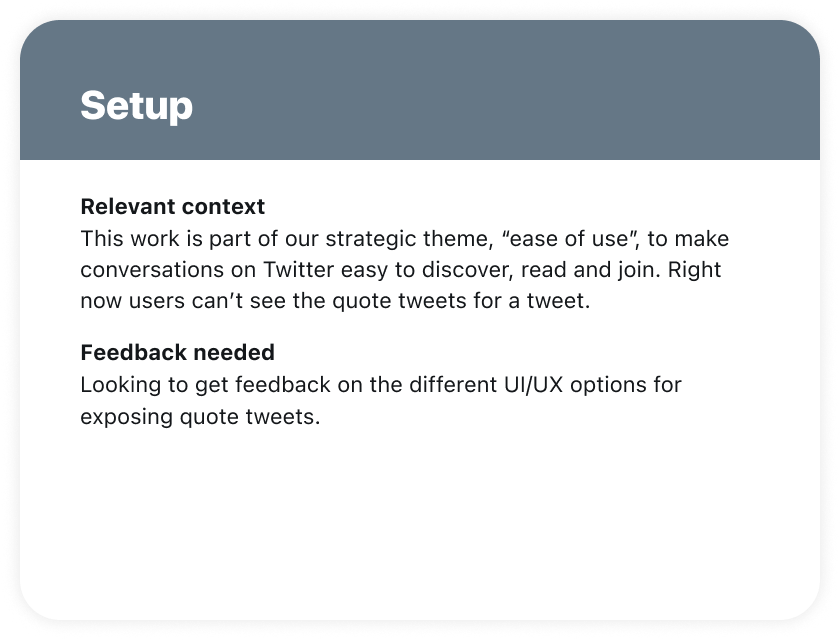
Example project
This is an example what a set of cards might look like for a project. The designer can choose the most relevant cards for their project and are not required to use them all.
Training sessions
In addition to creating the cards, I also held training sessions to help designers understand how and why to use them. The training also included best practices around communicating design and crafting hypotheses.